
Roof Systems
Commercial Roofing
Harrisburg, PA
Harrisburg, PA
Black EPDM Roofing in Harrisburg, PA
Black EPDM Membrane for Central Pennsylvania Re-Roof Projects
A good share of the commercial roof stock around Steelton, Enola, and Lebanon is older black EPDM, installed back when rubber membrane was the default low-slope choice before TPO took over new construction. We still spec it on re-roofs and recovers where its cold-weather flexibility and simple seam system fit the building better than a thermoplastic alternative.
Where Black EPDM Still Makes Sense in Central Pennsylvania
EPDM stays flexible at low temperatures better than most thermoplastic membranes, which matters on a building where crews need to work seams or flashing details during a cold snap without waiting for warmer weather. On industrial buildings near the Steelton mill corridor and older warehouse stock along the rail lines in Enola, black EPDM's proven long-term track record on ballasted and mechanically attached systems still makes it a reasonable choice on re-roof projects, especially where the existing roof was already EPDM and the substrate is in good shape.
It's not the default we lead with on new-construction warehouse bids, where TPO's welded seams and reflective color are usually the better fit. But on a re-roof over an intact EPDM base, or on a building where the owner wants to match an adjacent existing roof section, black EPDM remains a sound spec.
We also see it specified on buildings where the owner has decades of maintenance history with EPDM specifically and doesn't want to introduce an unfamiliar membrane family into that maintenance routine, even if TPO might otherwise be the more common new-construction default today.
Ballasted, Mechanically Attached, or Fully Adhered
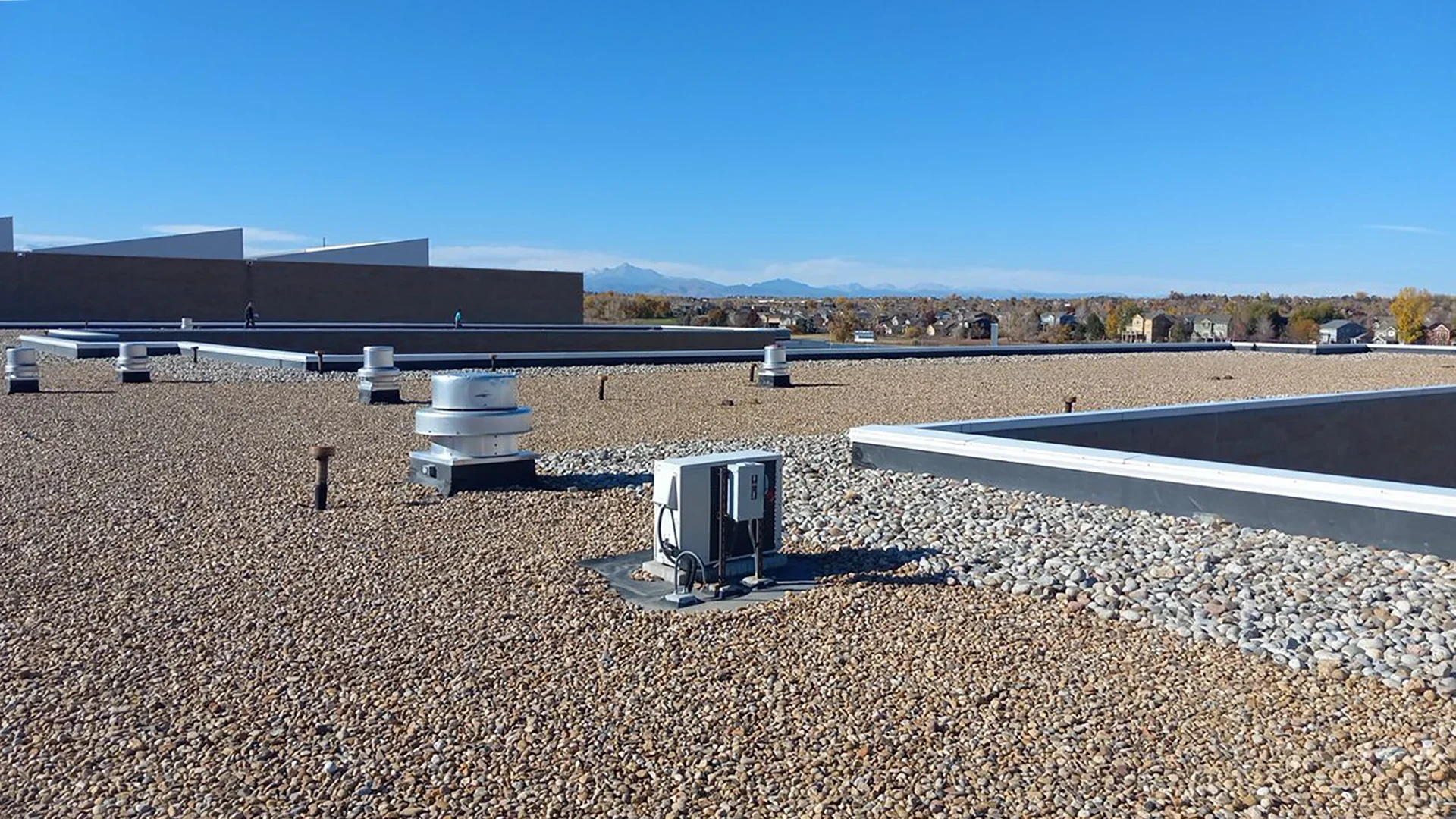
Ballasted EPDM, held down with stone or paver ballast rather than fasteners or adhesive, works well on structurally robust older buildings that can carry the extra dead load, and it's historically been a lower-labor install. Mechanically attached EPDM fits buildings that can't carry ballast weight, using the same plate-and-fastener logic as TPO but with taped or glued field seams instead of hot-air welds.
Fully adhered EPDM costs more but gives the flattest, most wind-resistant finish and is what we spec on buildings with complex rooflines or where ballast isn't an option structurally.
We confirm which attachment method the existing roof used before proposing a recover, since mixing attachment types between an old base layer and a new membrane isn't always a straightforward substitution and can affect both installation method and warranty eligibility on the new system.
Seam Preparation and Splice Longevity
EPDM seams rely on either seam tape or liquid splice adhesive rather than heat welding, and seam failure is the most common reason an older EPDM roof starts leaking. Preparation before the seam goes down matters more here than on a welded thermoplastic membrane. Our crews follow the same sequence on every EPDM splice:
- Clean and prime both membrane surfaces before any tape or adhesive contacts them
- Roll the seam under controlled pressure to eliminate air pockets
- Apply lap sealant at the seam edge as a secondary water barrier
- Probe-test a sample of completed seams before the crew moves to the next section
- Document seam locations and test results in the closeout package
On a re-roof where we're tying new EPDM into existing flashing, seam prep at that transition point gets extra attention because it's historically the first place these roofs leak.
Cold-Weather Installation Windows
Most EPDM adhesives and seam tapes have a minimum application temperature, and Central Pennsylvania's winter shutdown window is real. We schedule EPDM re-roof work to stay inside manufacturer-specified temperature ranges for adhesive cure, which sometimes means compressing a project into fall or spring rather than running through the coldest months.
Ballasted systems have more cold-weather flexibility than fully adhered ones, since ballast placement isn't temperature-sensitive the way adhesive cure is, which is one more reason ballasted EPDM stays a practical option on some of the older buildings we work on.
On projects where the schedule is tight and a cold snap is forecast mid-job, we sequence seam and flashing work first, while adhesive cure conditions are still favorable, and hold ballast placement or lower-priority field work for the tail end of the schedule where timing is more forgiving.
Black EPDM Questions We Field on Older Central PA Buildings
Is black EPDM still available, or has it been phased out?
It's still manufactured and specified, particularly for re-roof and recover work over existing EPDM systems. It's less common than TPO on new-construction warehouse bids but remains a standard product line.
Does black EPDM cost more to cool than a white membrane?
Black membrane absorbs more solar heat than white TPO or white EPDM, which can affect summer cooling load. On buildings where cooling cost is a priority, we discuss white EPDM or TPO as alternatives during the estimate.
How do you know if an old EPDM roof needs full replacement versus a recover?
We evaluate the existing membrane condition, seam integrity, and insulation moisture content before recommending either path. A roof with widespread seam failure or wet insulation usually needs tear-off rather than recover.
Can ballasted EPDM be installed on any roof?
No, the structure has to be engineered to carry the added ballast dead load. We confirm structural capacity before proposing a ballasted system.
How long do EPDM seams typically last before needing attention?
Well-prepared seams can last the life of the membrane, but seam inspection should be part of any preventive maintenance program, since seam failure is the leading cause of leaks on EPDM roofs over 15 years old.