
Roof Systems
Commercial Roofing
Harrisburg, PA
Harrisburg, PA
Silicone Roof Coatings in Harrisburg, PA
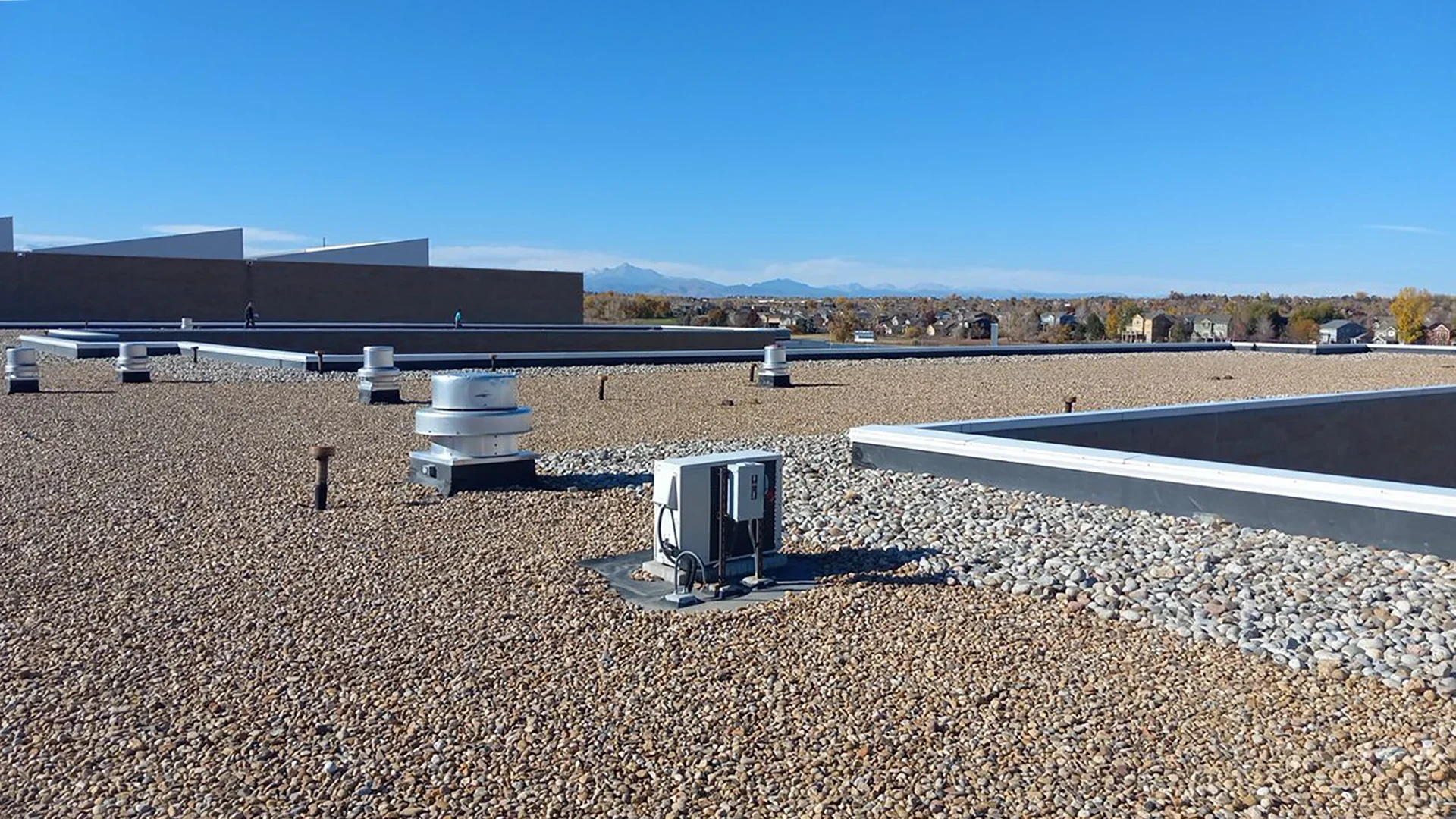
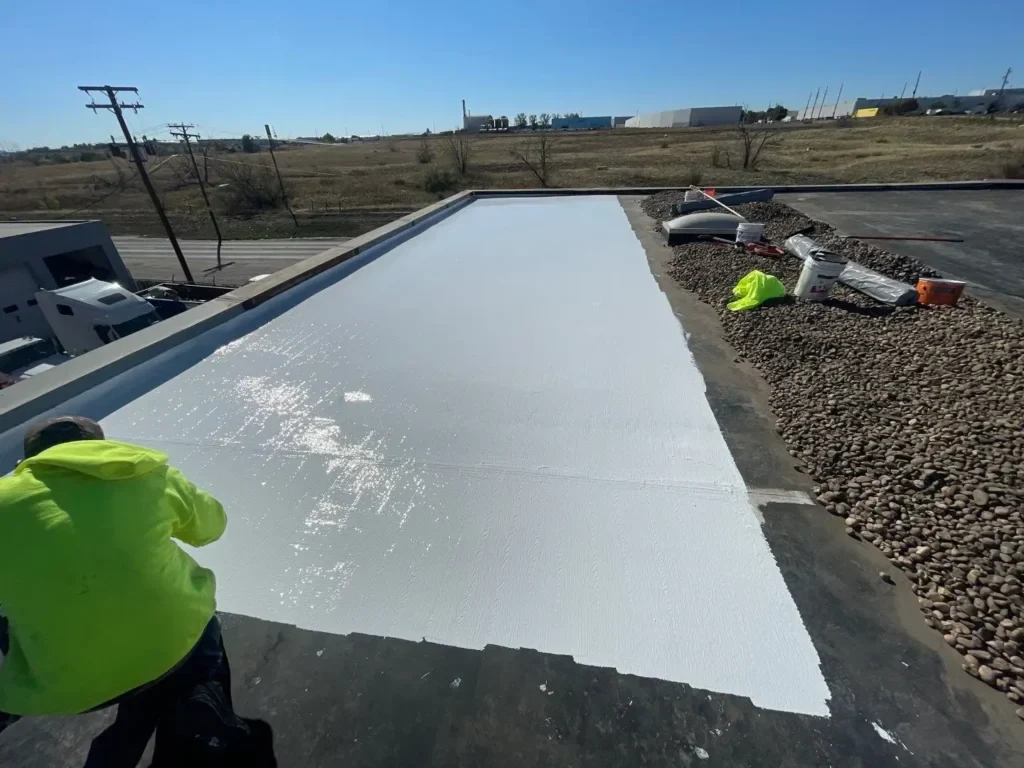
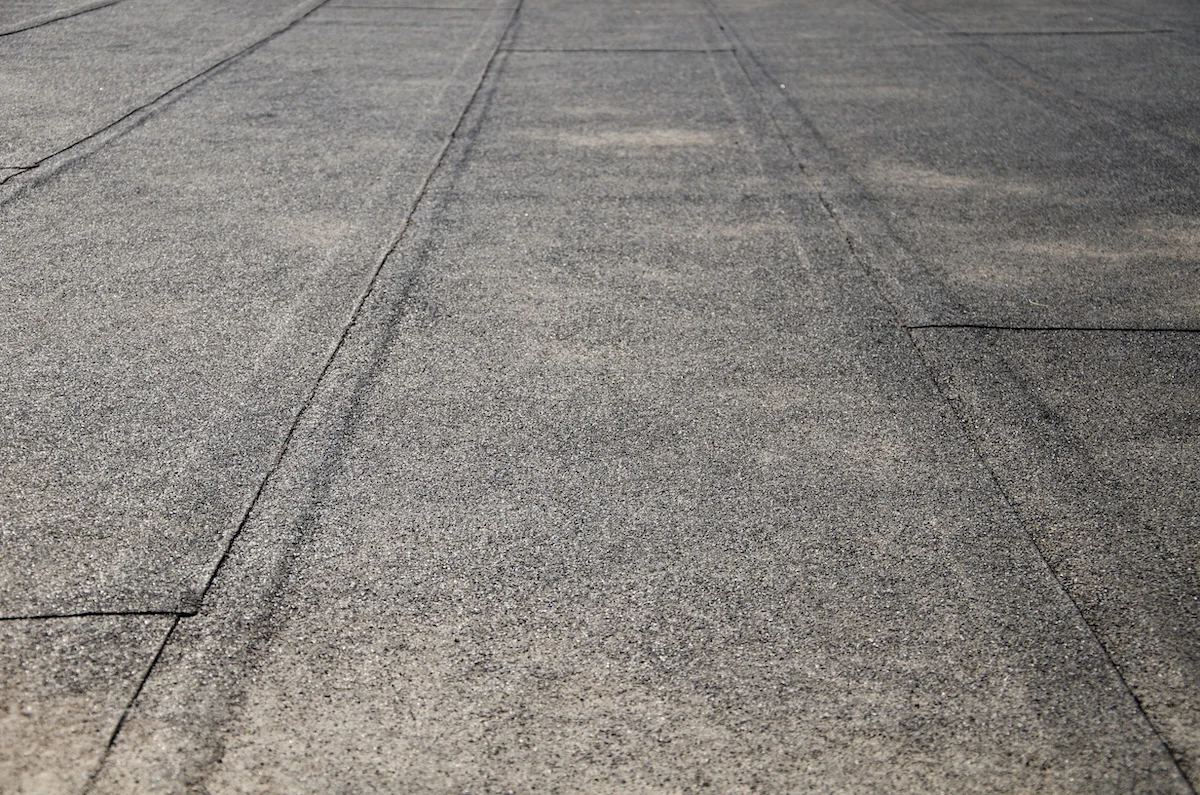
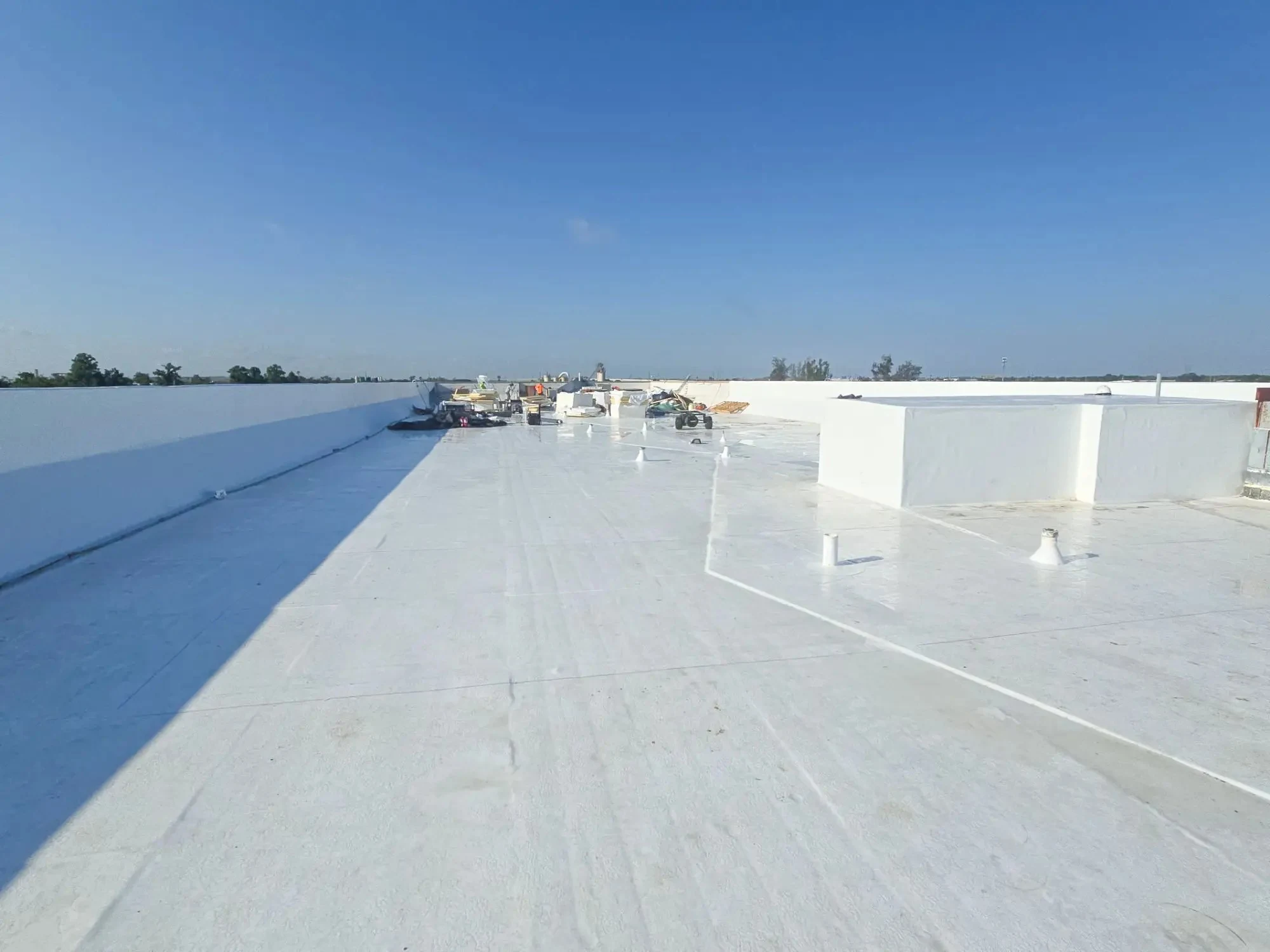
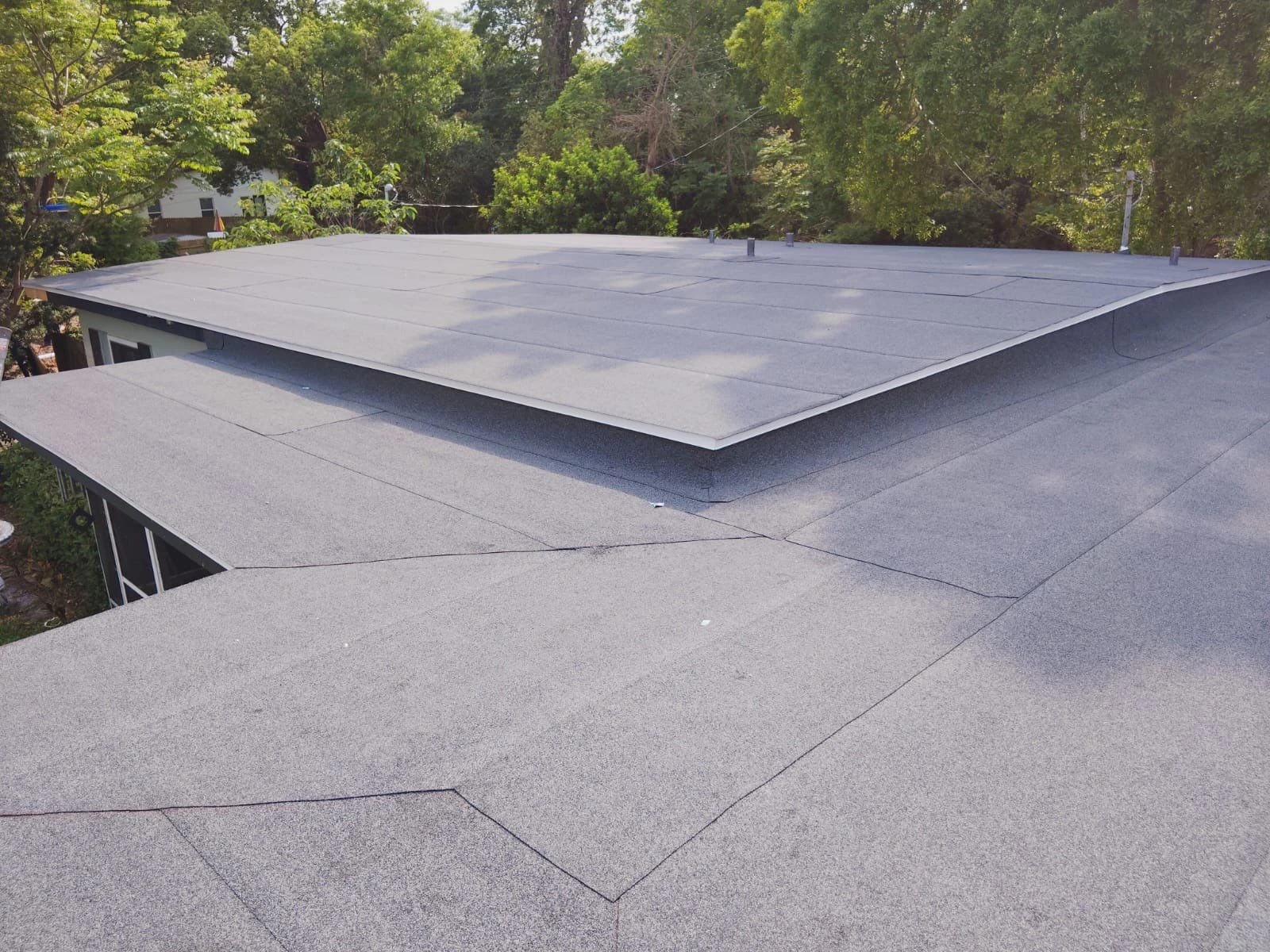
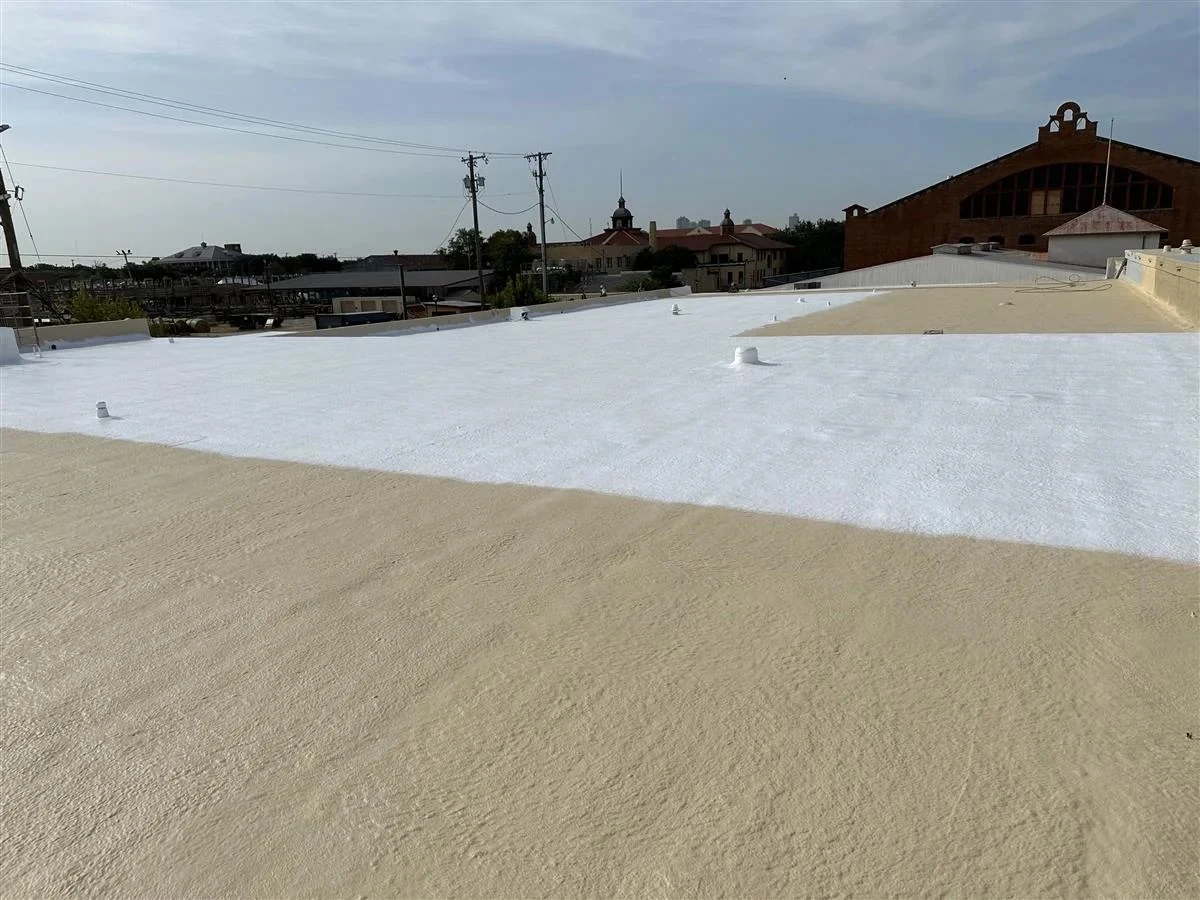
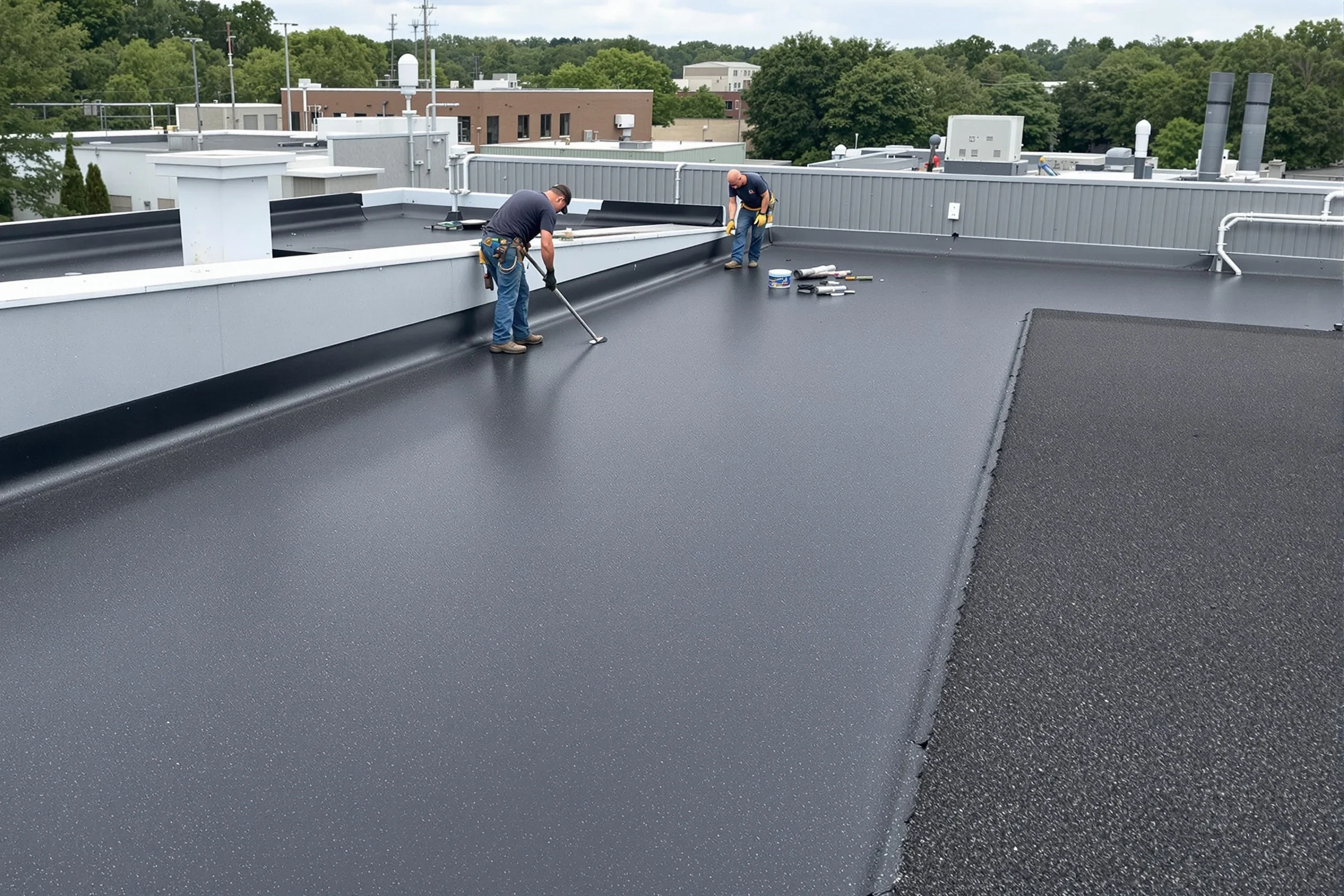
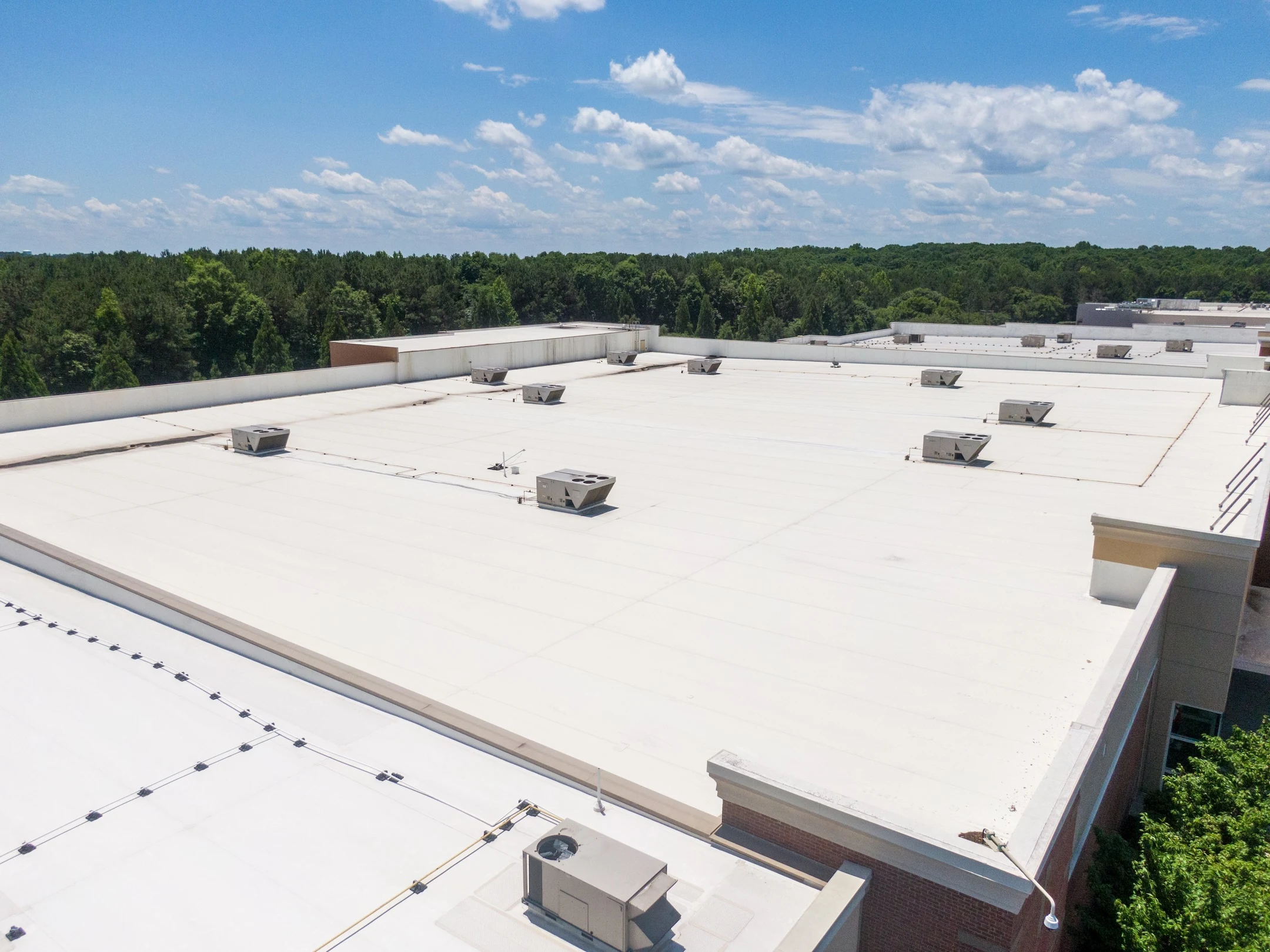
Silicone Coatings for Restoring Aging Flat Roofs
A silicone coating extends the life of a sound but aging roof without the cost and disruption of full tear-off, and it's a conversation we have often with owners of older buildings in and around downtown Harrisburg and the industrial stock near Steelton where the existing roof is still structurally intact but past its original membrane's prime.
Restoration vs. Tear-Off: When Coating the Existing Roof Makes Sense
Coating only makes sense over a roof that's dry underneath and free of widespread membrane failure. We inspect the existing substrate, including moisture-scanning where warranted, before recommending a coating scope over a full replacement. A roof with wet insulation or extensive base flashing failure needs tear-off regardless of how the coating budget looks on paper.
Infrared moisture scanning gives us a non-destructive way to check for wet insulation across a large roof area before committing to a coating scope, and on an older building where the roof's maintenance history is incomplete, that scan is often the deciding factor in which direction we recommend.
When the substrate does check out, coating can add 10 to 15 years of service life at a fraction of tear-off replacement cost, which is a meaningful capital-planning tool for owners managing aging BUR or modified bitumen roofs on older government and industrial buildings in this market.
Ponding-Water Resistance and Why It Matters on Flat Fields
Silicone's biggest practical advantage over acrylic coatings is ponding-water resistance. Acrylic coatings can soften and degrade under standing water; silicone tolerates it far better, which matters on the kind of dead-flat older roofs common on buildings built before tapered-insulation design became standard practice.
We don't treat coating as a substitute for fixing a drainage problem, though. If a roof has structural ponding from deck deflection rather than just aging insulation, we address the underlying drainage issue as part of the scope rather than coating over a problem that will keep recurring.
On older downtown buildings with deck deflection from decades of accumulated dead load, adding tapered insulation crickets during the coating prep phase can correct localized ponding without the cost of a full structural retrofit, which is often the most practical fix available short of replacement.
Substrate Preparation Before Coating Application
Coating adhesion depends entirely on substrate preparation, and this is where a rushed coating job fails within a year or two. Before any coating goes down, our crews complete the same preparation sequence regardless of the underlying membrane type:
- Pressure-wash the entire roof surface to remove dirt, chalk, and biological growth
- Repair or replace any failed seams, flashing, or membrane sections found during inspection
- Allow adequate dry-down time before coating, verified rather than assumed
- Apply manufacturer-specified primer where the substrate requires it
- Reinforce seams, penetrations, and drains with fabric where the coating system calls for it
Skipping dry-down time is the single most common reason a coating job fails early, since moisture trapped under a fresh coating has nowhere to go and eventually blisters the surface.
On a re-roof over an older BUR system near downtown, we've found it worthwhile to schedule preparation and coating as separate visits rather than back-to-back days, giving the substrate a full weather cycle to confirm it's dried out before committing to the coating application itself.
Fabric reinforcement at drains and low points gets extra attention on every coating scope, since these are the areas that see the most standing water over the roof's life and the places a thin, unreinforced coating is most likely to wear through first.
Recoat Cycles and Warranty Structure
Silicone coatings aren't a one-time fix; they're a maintenance strategy with a recoat cycle built into the plan, typically every 10 to 15 years depending on coating thickness and UV exposure. Manufacturer warranties on coating systems are tied to minimum dry-film thickness, which is why we monitor application rate closely during installation rather than eyeballing coverage.
We build the recoat interval into the preventive maintenance plan we set up for owners after a coating project, so the next recoat is scheduled proactively rather than discovered after the coating has already started to fail.
For owners managing multiple older buildings on a shared capital-planning schedule, staggering coating and recoat cycles across the portfolio, rather than defaulting every roof to the same calendar, keeps the annual maintenance budget more predictable year to year.
Silicone Coating Questions from Owners Weighing Restoration
How do I know if my roof is a good candidate for coating instead of replacement?
We inspect the substrate condition, check for trapped moisture, and evaluate existing seam and flashing integrity. A roof with isolated wear but a sound structural base is usually a strong coating candidate.
Is silicone coating cheaper than a full tear-off and replacement?
Generally, yes, coating costs a fraction of full replacement, which is why it's attractive for capital planning on buildings not ready for a full roof budget.
Does silicone coating work on metal roofs in addition to BUR or modified bitumen?
Yes, silicone coatings are commonly used to restore aging metal roofs as well, particularly where seam corrosion or fastener back-out has started but the panels themselves are still sound.
How long does a coating job take compared to a full re-roof?
Coating projects typically move faster than tear-off replacement since there's no demolition, deck inspection and repair, or new insulation installation involved, though weather windows for cure still apply.
What happens when the coating eventually needs a recoat?
A properly maintained coated roof gets recoated on the cycle built into its maintenance plan, extending service life further without returning to a tear-off decision.