
Service Areas
Commercial Roofing
Harrisburg, PA
Harrisburg, PA
Commercial Roofers for Camp Hill's Office and Hospital Corridor
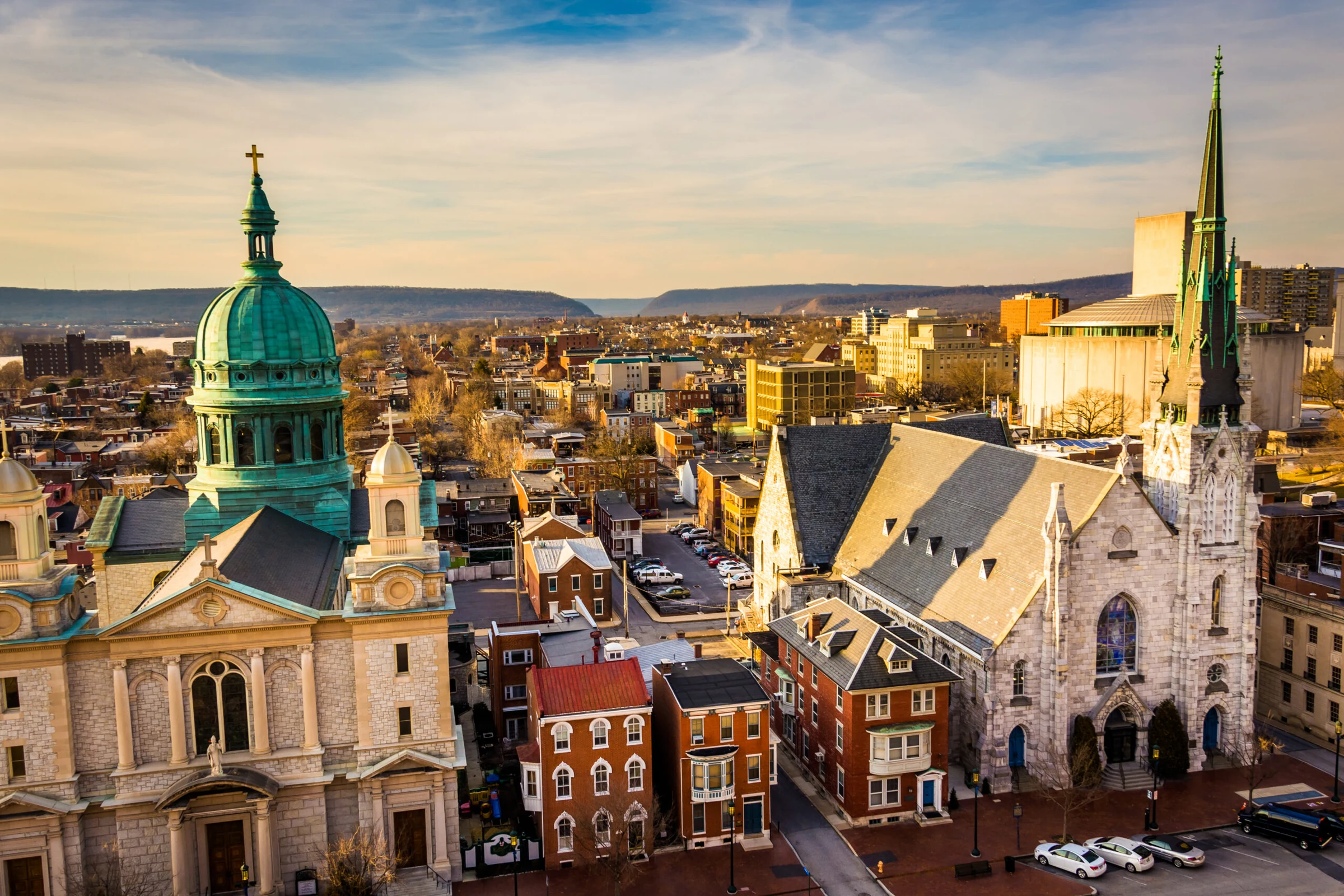
Commercial Roofers in for Camp Hill's Office and Hospital Corridor
For commercial properties in for Camp Hill's Office and Hospital Corridor, the defensible choice between repair, restoration, and replacement starts with roof-system condition, moisture findings, drainage performance, and remaining service life. Camp Hill anchors the West Shore's office and healthcare base, with mid-rise office buildings, medical office buildings tied to the hospital campus, and the retail corridor along Route 15 all inside a few square miles. We size the roofing approach to the building's function — a medical office roof gets a different inspection cadence than a retail strip roof, even when the membrane is the same TPO or EPDM system.
Medical Office Building Roofing
Medical office buildings near the hospital campus carry sensitive equipment — imaging suites, lab refrigeration, pharmacy storage — that makes a roof leak a bigger event than it would be in a standard office. We prioritize response time on these buildings and check flashing at every rooftop mechanical penetration first on any inspection, since MOB roofs tend to accumulate more added equipment over time than a typical office building, and each addition is a potential leak point if it wasn't flashed correctly.
Preventive maintenance matters more on this building type than almost anywhere else in Camp Hill. We run these buildings on a set inspection schedule under our maintenance program rather than a reactive call-when-it-leaks approach, because a delayed leak repair in a medical office building can mean equipment damage or a disrupted patient schedule, well beyond a wet ceiling tile.
Multi-Tenant Office Park Roofs
The office parks off Route 15 and around the Camp Hill Bypass are mostly low-slope TPO and EPDM buildings from the 1980s through 2000s, many now managed by property management firms overseeing several buildings at once. Coordinating a reroof or major repair across a multi-tenant building means working around several different lease terms and access agreements, so we confirm tenant notification and access windows with the property manager before scheduling anything that involves roof-level noise or interior ceiling access.
Route 15 Retail Corridor
The retail buildings along the Route 15 corridor — freestanding restaurants, strip retail, big-box anchors — see more foot traffic in and out of tenant spaces, which puts a premium on keeping roof work from disrupting business hours. We schedule tear-off and hot work outside peak retail hours where the project allows, and we keep the site secured and clean at the end of each day rather than leaving debris staged in a customer parking lot overnight.
Roof Age and Warranty Status Across the Corridor
A lot of Camp Hill's commercial roof stock is old enough that original manufacturer warranties have expired, which changes the calculus on repair versus replacement. We check warranty status as a first step on any inspection, because a roof still under an active NDL warranty needs repairs performed or approved by the original installer or an authorized contractor to avoid voiding coverage — something we verify before doing any work on a roof we didn't originally install.
- Priority response scheduling for medical office building leaks
- Flashing audits focused on added rooftop mechanical equipment
- TPO and EPDM recover for aging 1980s-2000s office park roofs
- Tenant-coordinated scheduling for multi-tenant buildings
- After-hours tear-off scheduling for active retail corridors
- Warranty status verification before repair work begins
Wind and Storm Exposure on the West Shore
Camp Hill sits in the same storm track as the rest of the Harrisburg market, and its mix of building heights along the Bypass creates localized wind funneling in a few spots that we've learned to check first after any significant wind event. Post-storm inspections on Camp Hill's office and retail buildings routinely turn up lifted edge metal and displaced coping before any interior leak shows up, which is why we recommend a walk-through after any named storm rather than waiting for a call.
Mixed-Use Buildings and Portfolio Capital Planning
A handful of buildings closer to Camp Hill's older neighborhood commercial nodes carry ground-floor retail with residential or office space above, a construction type that puts a low-slope roof over occupied living space rather than just office or warehouse floor. Leak tolerance on these is effectively zero — a slow leak over a residential unit becomes a habitability and code-compliance issue much faster than the same leak over a storage room — so we treat any inspection finding on this building type as a near-term repair priority rather than something to fold into a routine maintenance cycle.
Property managers overseeing several Camp Hill buildings often ask us to help sequence capital spending across a portfolio rather than quoting each roof in isolation. We provide condition ranking across a group of buildings — which roofs need attention this budget cycle versus which can be deferred another year or two with continued maintenance — so an owner can plan capital allocation with real data instead of guessing which building is closest to failure.
Questions From Camp Hill Property Managers
How fast can you respond to a leak in a medical office building?
We prioritize MOB and healthcare-adjacent calls above standard commercial response, given the equipment and patient-schedule sensitivity involved.
Will repairing an older roof void a warranty we didn't know was still active?
It can, if the original manufacturer requires repairs by an authorized contractor. We check warranty status first, before any repair work begins, to avoid that risk.
Can you schedule roof work around our tenants' business hours?
Yes, particularly for retail buildings. We plan tear-off and hot work outside peak hours where the project timeline allows.
Do you inspect roofs automatically after a storm, or do we need to call?
We recommend a post-storm walk-through on any building after a named storm or significant wind event, and we can set that up as a standing part of a maintenance program.
What's different about roofing a building near the hospital campus versus a standard office?
Mostly the equipment sensitivity and the response-time expectation. The membrane and system choice isn't necessarily different, but the inspection cadence and leak-response priority are higher.