
Commercial Roofing Services
Commercial Roofing
Harrisburg, PA
Harrisburg, PA
Roof Drains and Scuppers in Harrisburg, PA

Roof Drain and Scupper Service for Central Pennsylvania Buildings
Drainage decides how long a flat commercial roof lasts more than almost any other single factor. A membrane can be installed perfectly and still fail early if the roof doesn't shed water fast enough, and in a region where thunderstorm cells build quickly off the Susquehanna valley and winter brings wet, heavy snow load, drain and scupper capacity isn't a detail to get wrong. We install, repair, and service roof drains and scuppers on commercial buildings throughout the Harrisburg area.
Interior Drains Versus Perimeter Scuppers
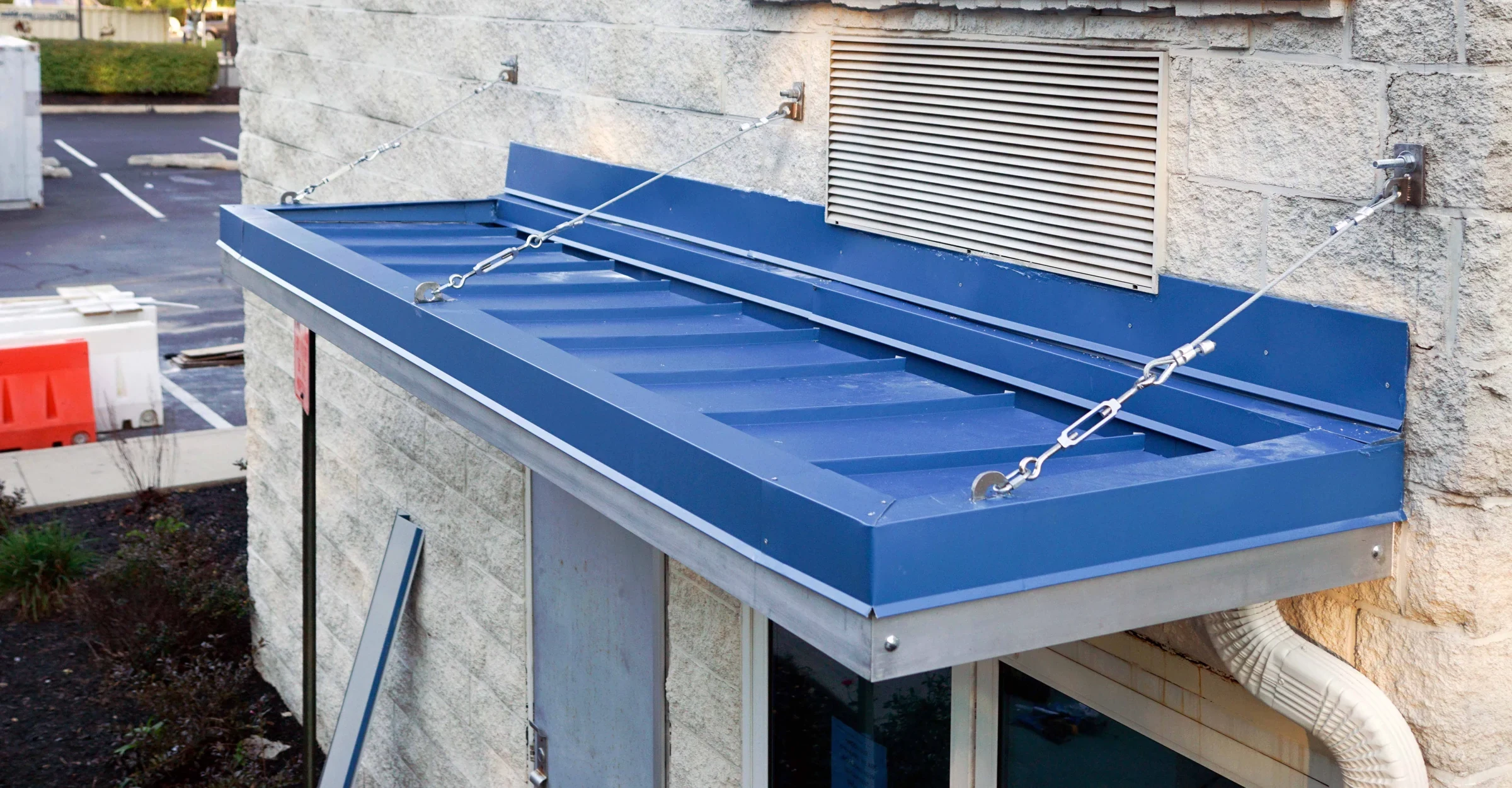
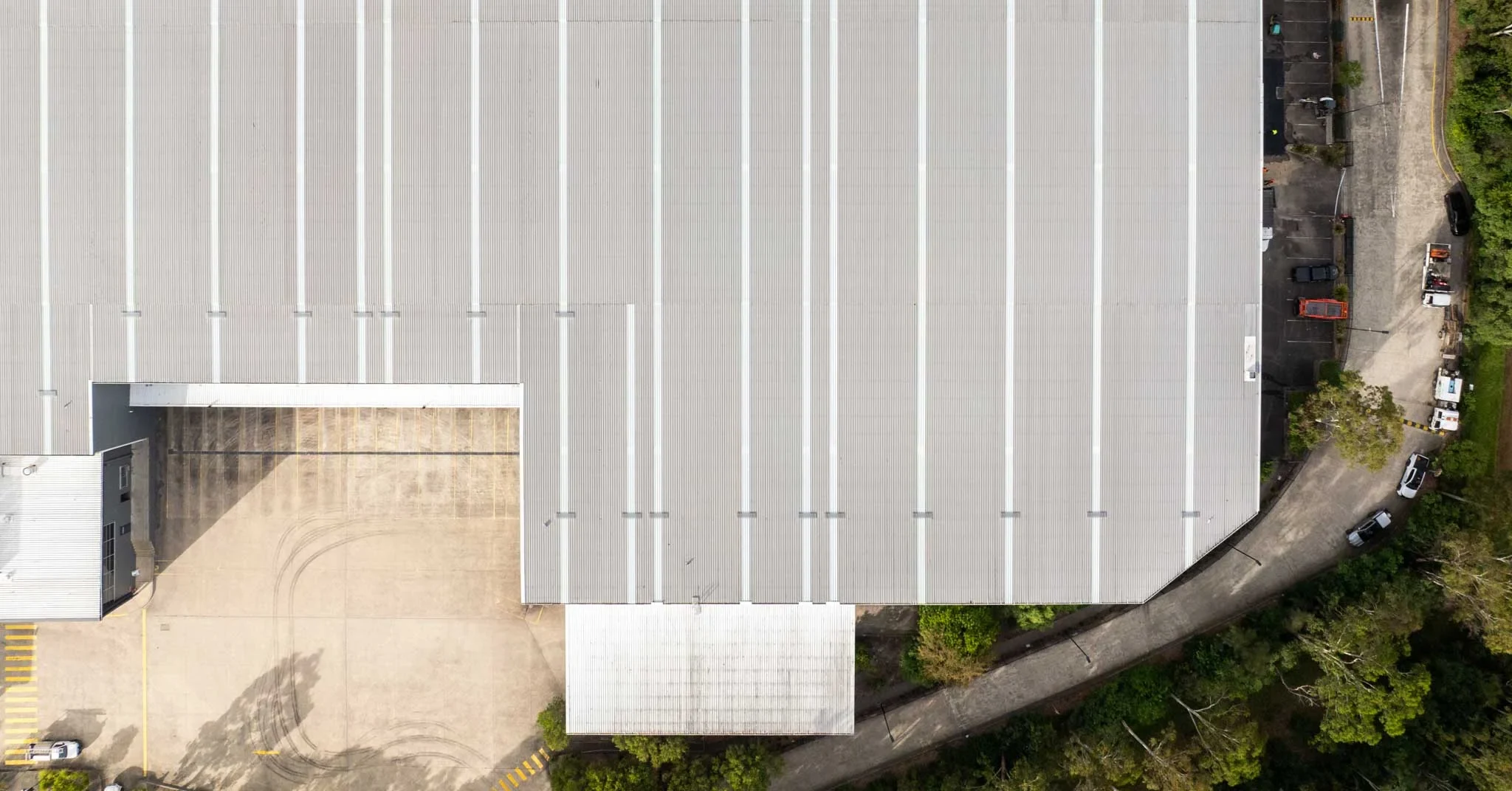
Most large flat roofs in this region, particularly the big-box warehouse and distribution roofs around Carlisle and Silver Spring Township, use interior drains tied into the building's plumbing system, positioned at low points across the roof field. Smaller commercial buildings and many retail strips instead use perimeter scuppers, openings through the parapet wall that let water exit at roof edge, sometimes into a conductor head and downspout, sometimes as a free-discharge scupper.
Each system has different failure modes. Interior drains clog with debris and, on older buildings, sometimes suffer from a drain bowl that's settled below the surrounding membrane, creating a permanent low spot that ponds even when the drain itself is clear. Scuppers clog less often but are more prone to ice damming in winter, when meltwater refreezes at the opening and blocks drainage right when a roof needs it most during a thaw cycle.
Sizing Drainage for Actual Rainfall Intensity
Drain and scupper sizing isn't a fixed number. It depends on roof area, slope, and the rainfall intensity the local code requires designing for, and Susquehanna valley thunderstorms can dump a significant amount of rain in a short period. We size new or replacement drainage systems to current plumbing code rainfall tables for this region, not to whatever was adequate when an older building was originally constructed decades ago under a different code cycle.
Undersized drainage is a common finding on older buildings in Lebanon and the smaller river boroughs, where additions or rooftop equipment installed over the years increased the effective roof area draining to a fixed number of original drains, without anyone reassessing whether those drains could still handle the load.
Secondary or Overflow Drainage
Code requires overflow drainage, whether that's overflow scuppers set slightly higher than the primary drain elevation or a secondary interior drain system, so that if primary drains clog completely during a storm, water has somewhere else to go before it exceeds the roof's structural design load. We check overflow drainage function as part of any drain service call, since it's the system that only matters in an emergency and is therefore the one most likely to have been neglected.
- Interior drain clearing and drain bowl elevation check
- Scupper clearing and ice-damming risk assessment before winter
- Drainage capacity sized to current code rainfall tables
- Overflow scupper and secondary drain function verification
- Tapered insulation recommendations where ponding indicates inadequate slope
- Drain bowl reset or replacement on settled low-spot roofs
Ponding Water as a Design Problem More Than a Maintenance Problem
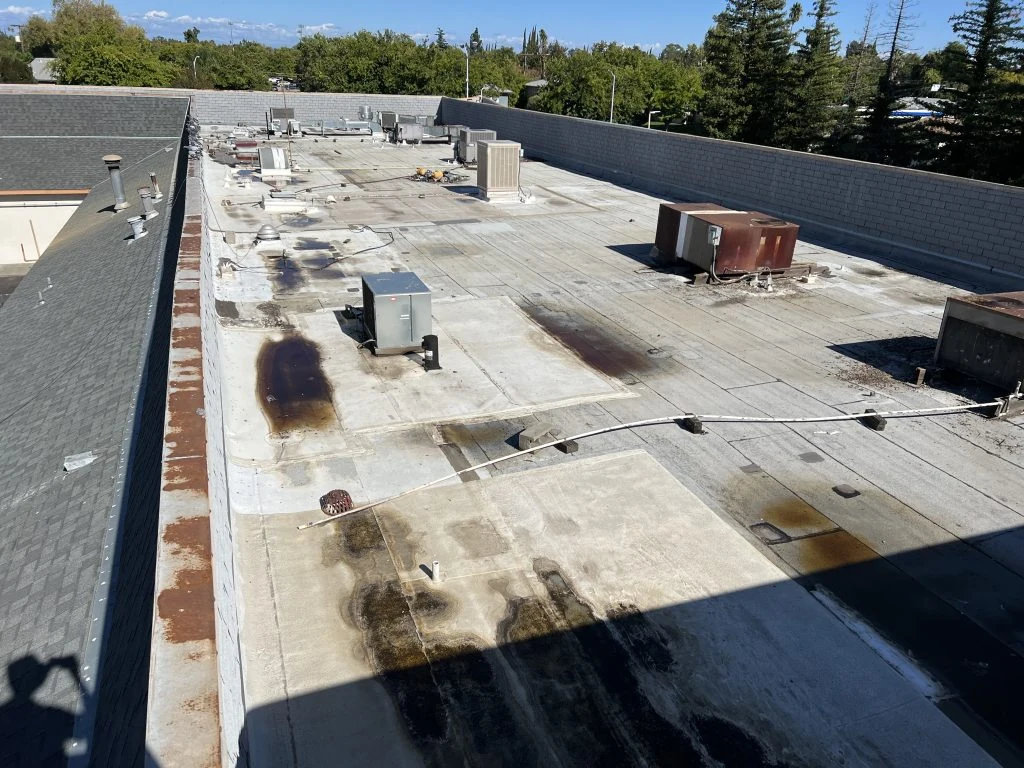
Standing water 48 hours after a rain event usually points to a design or settlement issue that clearing debris alone won't fix. We see this on some of the older distribution buildings around the Defense Distribution Center corridor near New Cumberland, where roof structure has settled slightly over decades, creating low areas between drains that no amount of drain clearing will resolve. In those cases, tapered insulation added during a recover or reroofing project corrects the slope permanently rather than treating a structural issue as an ongoing maintenance chore.
Drain Service Timing Around the Seasons
We recommend drain and scupper clearing at minimum twice a year: before the fall rainy season and again before winter's first snow, so meltwater has a clear path during freeze-thaw cycles rather than refreezing at a blocked opening. Buildings near trees, common in some of the borough properties in Camp Hill and Lemoyne, often need additional clearing through leaf-drop season in October and November.
Drain and Scupper Questions
How do we know if our roof drains are actually undersized?
Persistent ponding away from any obvious debris blockage, or ponding that clears slowly even right after a clog is removed, both suggest a capacity issue rather than a maintenance issue. We can calculate whether existing drain size matches current code requirements for the roof area involved.
Why does water still pond even after a drain is cleared?
Often the drain bowl has settled below the surrounding roof deck over years of building settlement, creating a permanent low spot around the drain itself. Clearing the drain opening doesn't fix a low elevation problem; that requires either resetting the drain bowl or adding tapered insulation around it.
Do scuppers need different winter attention than interior drains?
Yes. Scuppers are more prone to ice damming, where meltwater refreezes right at the opening during a freeze-thaw cycle and blocks drainage. We check scupper openings specifically for ice-damming risk heading into winter.
What does code require for overflow or secondary drainage?
Most commercial roofs need a secondary drainage path, either overflow scuppers set above the primary drain elevation or a separate secondary drain system, so the roof doesn't exceed its structural design load if primary drains clog during a storm.
Can drain issues be fixed without a full reroofing project?
Often yes. Clogged drains and damaged scuppers repair or clear as standalone service calls. Structural low spots from settlement typically need tapered insulation, which is more efficiently addressed during a recover or reroofing project than as an isolated repair.