
Service Areas
Commercial Roofing
Harrisburg, PA
Harrisburg, PA
Commercial Roofing Contractors Hampden Township
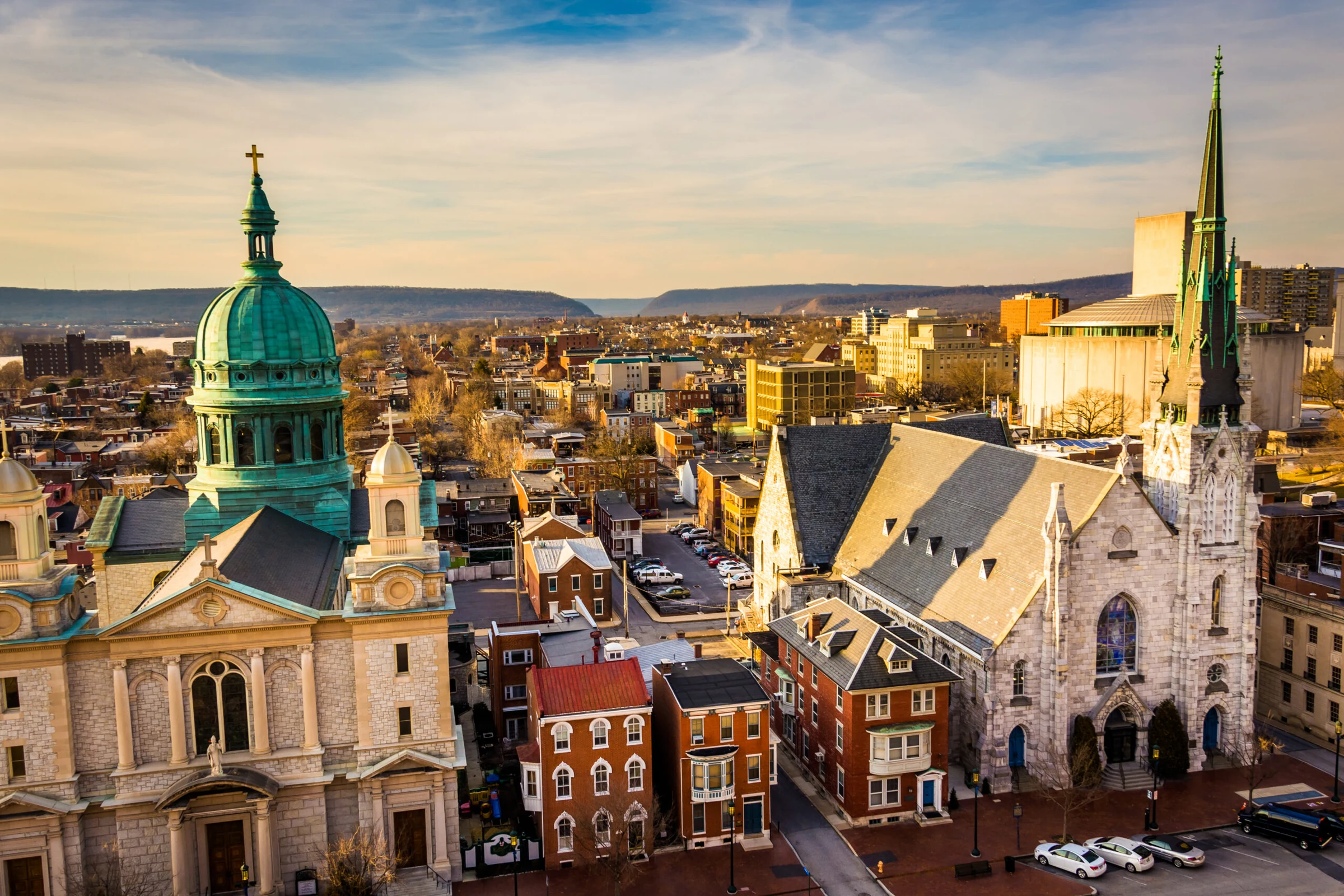
Commercial Roofers in Hampden Township
Commercial roofers serving Hampden Township should document leak sources, wet insulation, drainage, edge details, penetrations, and repair history before recommending a scope. Hampden Township carries one of the busiest big-box retail stretches on the West Shore along Carlisle Pike, backed by a run of office parks off Good Hope Road and the surrounding business corridors. Our work here splits between large single-tenant retail roofs — the kind sitting under a grocery anchor or home-improvement store — and smaller multi-tenant office buildings with a different set of access and scheduling constraints.
Big-Box Retail Roofing
Large single-tenant retail buildings along Carlisle Pike typically run TPO or EPDM over a steel deck built to a fairly standard big-box footprint, and most of the leak calls we get from this building type trace to rooftop unit curbs and skylights rather than the field membrane itself. Retail HVAC systems on these buildings tend to be replaced or serviced more often than the roof itself, and every service call from a mechanical contractor is a chance for a curb flashing detail to get disturbed without anyone reporting it. We check curb flashing condition as a standard part of any retail roof inspection, regardless of what brought us out.
Reroofing an occupied big-box store means working around business hours and customer parking without shutting the store down, which is close to non-negotiable for most of these tenants. We stage material and equipment to keep customer entrances and fire lanes clear, and we schedule the noisiest phases of tear-off for hours when it won't disrupt in-store business.
Office Park Roofs Off Good Hope Road
The office parks in this part of Hampden Township are mostly low-slope TPO and EPDM buildings from the 1990s and 2000s, similar in age and construction to the office stock in neighboring Camp Hill and Mechanicsburg. We run the same scheduled inspection approach here — checking condition against the manufacturer's original warranty term rather than waiting for a leak — since most of these buildings are managed by firms overseeing multiple properties who'd rather budget for a planned reroof than absorb an emergency one.
Rooftop Signage and Equipment Coordination
Retail buildings in this corridor frequently have rooftop-mounted signage, satellite dishes, and additional equipment installed by tenants or sign contractors well after the original roof went in, and those installations are a recurring source of flashing problems we find during inspection. We flag any penetration that wasn't detailed to the original manufacturer's spec and correct it as part of a repair or reroof scope, since an improperly flashed sign mount is one of the more preventable leak sources in this market.
- TPO and EPDM systems for big-box retail and grocery-anchor roofs
- Curb flashing inspection tied to HVAC service history
- Business-hours-friendly staging for occupied retail reroofs
- Scheduled inspection programs for multi-property office managers
- Correction of improperly flashed signage and equipment mounts
- Manufacturer warranty term tracking for aging office park roofs
Storm Exposure Along the Carlisle Pike Corridor
The open parking lot fields and large single-story roof spans typical of big-box retail in this corridor give hail and wind-driven debris a lot of unobstructed roof surface to hit during a storm. We recommend a post-storm inspection on any large retail roof after a hail or high-wind event, since membrane punctures and lifted edge metal from these events aren't always visible from the ground and can go unnoticed until they cause an interior leak weeks later.
Restaurant and Freestanding Pad-Site Roofing
The freestanding restaurant pad sites that ring Hampden Township's larger retail centers carry their own roofing considerations — grease exhaust venting from kitchen hoods, smaller roof footprints with proportionally more penetrations per square foot than a big-box store, and tighter parking-lot access for material staging. We size crew and equipment for these smaller jobs differently than a big-box reroof, and we pay particular attention to kitchen exhaust penetration flashing, which is one of the more common leak sources on restaurant roofs specifically because of the grease and heat exposure at that one penetration.
Roof Access and Fall Protection on Occupied Buildings
Working above an occupied retail space or restaurant means fall protection and interior protection measures matter as much as the roofing work itself. We set up guardrail or anchor-point fall protection appropriate to the building's parapet height before work begins, and we protect interior finishes and merchandise from any incidental dust or debris during tear-off, since a roofing crew's obligation to the tenant below doesn't end at the roof deck.
Questions From Hampden Township Retail and Office Managers
Can you reroof a store without closing it to customers?
Yes. We stage the project to keep entrances and fire lanes clear and schedule the disruptive phases of tear-off around the store's business hours.
Why do rooftop signs cause roof leaks?
A sign or equipment mount installed after the original roofing project often isn't flashed to the manufacturer's detail, which creates a leak point at the penetration. We check for this on every retail inspection.
Should we inspect our roof after every storm, or just the bad ones?
At minimum after any hail event or high-wind event with visible debris impact. Damage from these events isn't always visible from ground level.
How do you decide between recover and full replacement on a big-box roof?
We base it on deck and insulation condition found during a core-cut inspection, not on the building's age alone — some older roofs are still sound enough to recover.
Do you coordinate with our HVAC contractor during a reroof?
Yes, particularly around curb flashing and equipment placement, since miscommunication between roofing and mechanical trades is a common source of future leaks.