
Service Areas
Commercial Roofing
Harrisburg, PA
Harrisburg, PA
Commercial Roofing Contractors Dauphin, PA
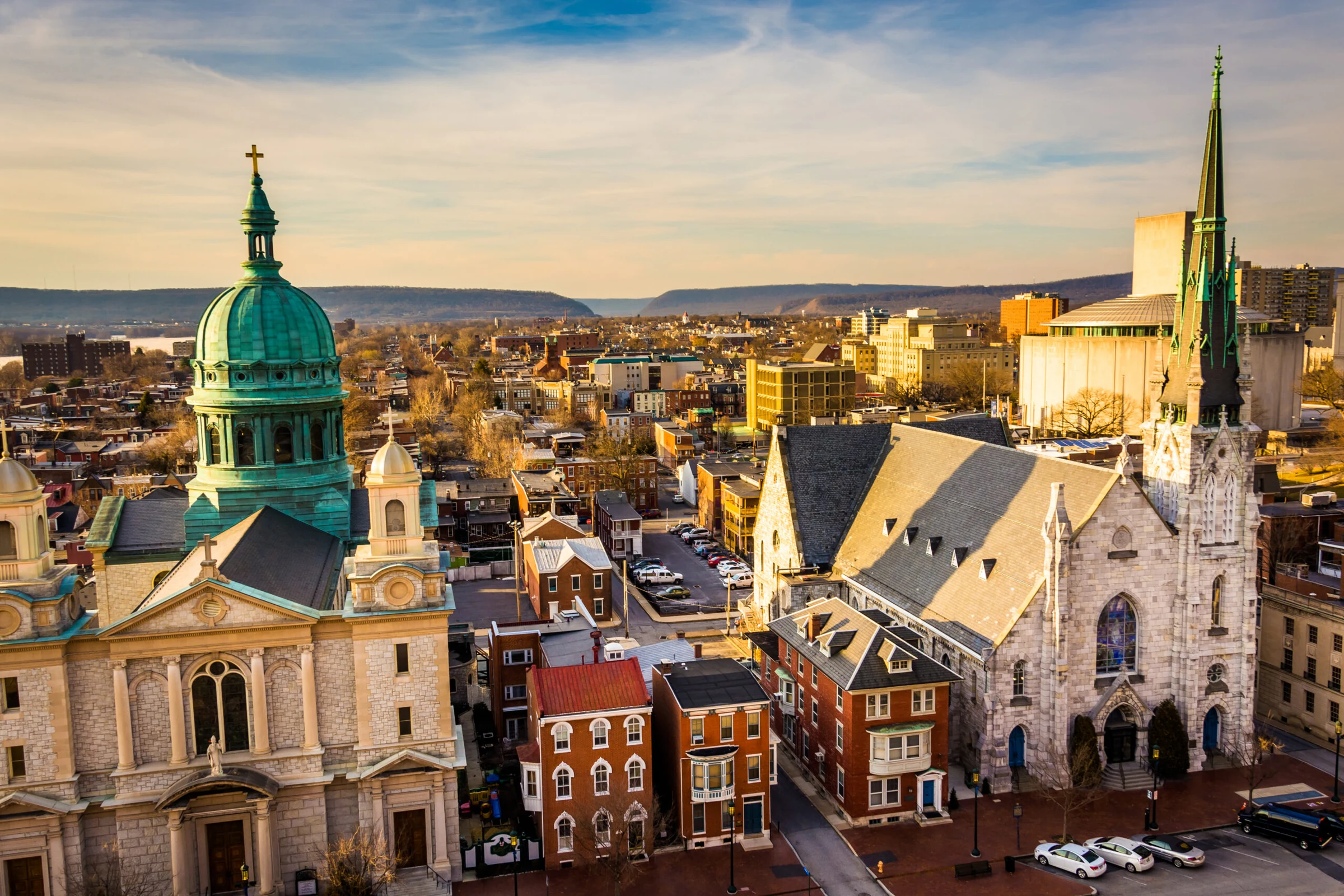
Commercial Roofers in Dauphin, PA
For commercial properties in Dauphin, PA, the defensible choice between repair, restoration, and replacement starts with roof-system condition, moisture findings, drainage performance, and remaining service life. Dauphin is a small borough along the Susquehanna, tucked between the river and the Route 22/322 corridor just north of Harrisburg and Fort Hunter, and its commercial roofing base is limited to a modest number of small local businesses and institutional buildings. We scope every project here honestly, without inflating what's actually a small market, and without proposing more roof system than a small building actually needs.
Small Commercial Buildings Along the Route 22/322 Corridor
The handful of commercial buildings in Dauphin sit mostly along the Route 22/322 corridor as it passes through the borough, small retail, service businesses, and professional offices with flat or low-slope roofs typical of a small river-town main street. It's a modest commercial base, and the roofing work here reflects that, repair and maintenance far more often than new construction.
We treat these small jobs with the same documentation standard as any larger commercial project, a written scope and manufacturer-approved materials, even when the building itself is a fraction of the size of a warehouse elsewhere in the Harrisburg market.
River Proximity and Moisture Exposure
Being situated directly along the Susquehanna gives Dauphin's commercial buildings the same elevated ambient moisture exposure we see in other river-adjacent boroughs in this market, which can accelerate membrane aging if drainage isn't properly maintained. We pay close attention to drain and scupper function on buildings closest to the water.
That attention matters more here than it would on a comparable inland building a few miles away, since standing water combined with persistent riverside humidity compounds wear on an aging membrane faster than either factor alone would.
What We Check on Dauphin's Small River-Adjacent Roofs
On a commercial building along Dauphin's stretch of the river corridor, we typically confirm:
- Drain and scupper capacity relative to the building's actual roof size
- Membrane condition in any low spots prone to ponding
- Flashing integrity given persistent riverside humidity exposure
- Insulation moisture content beneath any area with a leak or patch history
- Edge metal and fastener corrosion resistance near the waterline
This kind of drainage-focused inspection doesn't change what system we'd ultimately recommend, but it does change how often we suggest checking on a roof that's aging in this specific environment.
Institutional and Municipal Buildings Near Fort Hunter
Dauphin's borough building and its small set of institutional structures, a church, a fire company, round out the commercial roofing picture here. Being close to Fort Hunter and the broader Harrisburg-area historic and parkland corridor doesn't change the underlying roofing needs, but it does mean some of these buildings get more foot traffic and public visibility than their size would otherwise suggest.
Public buildings in Dauphin fall under the same Pennsylvania competitive bidding requirements as any other municipal project above the applicable threshold, and we prepare documentation to match when a project crosses that line.
Freeze-Thaw and Seasonal Load on a Small River Borough
Dauphin sees the same freeze-thaw cycling as the rest of the Lower Susquehanna Valley, and on a small, older commercial roof that cycling shows up first at flashing details and seams rather than across the full membrane field. Catching that early wear during a scheduled inspection is far cheaper than waiting for an active leak.
For a borough this size, most owners are managing a single building without dedicated facilities staff, so we try to make the inspection and maintenance conversation as straightforward as possible, plain findings, a clear recommendation, and no more service than the roof actually needs.
Access and Site Constraints Along the River Corridor
Buildings directly along Dauphin's stretch of river corridor sometimes have limited staging area between the road and the water, which affects how we plan material delivery and equipment placement for larger repair or replacement jobs. We account for that site constraint during the estimate rather than assuming a standard suburban staging area is available.
On the borough's smaller side streets away from the river, access is more straightforward, but we still confirm site conditions ahead of any job rather than assuming based on a similar building elsewhere in the corridor.
We note these access details in the proposal itself, so there's no ambiguity between what was quoted and what the crew actually needs to do to get equipment and materials onto a specific roof.
Questions From Dauphin Business and Building Owners
Is there much commercial roofing activity in a borough this small?
It's modest. Most of our work in Dauphin is repair and maintenance on existing small commercial and institutional buildings rather than new construction.
Does the riverside location affect how you approach these roofs?
Yes, we pay closer attention to drainage and moisture-related wear on buildings closest to the water, since persistent riverside humidity accelerates membrane aging.
Do you handle bids for the borough building or other municipal structures?
Yes, we prepare documentation to meet Pennsylvania's competitive bidding requirements for public projects above the applicable threshold.
How often should a small, older commercial roof in Dauphin be inspected?
We recommend a regular scheduled inspection, since freeze-thaw wear here typically shows up first at flashing and seams, which is far cheaper to catch early than after a leak develops.
Do you scale your service down for a single-building owner without facilities staff?
Yes, we keep the process straightforward for owners managing one building themselves, plain findings and a clear recommendation without overselling service the roof doesn't need or a scope it can't support.