
Service Areas
Commercial Roofing
Harrisburg, PA
Harrisburg, PA
Commercial Roofing Contractors Steelton, PA
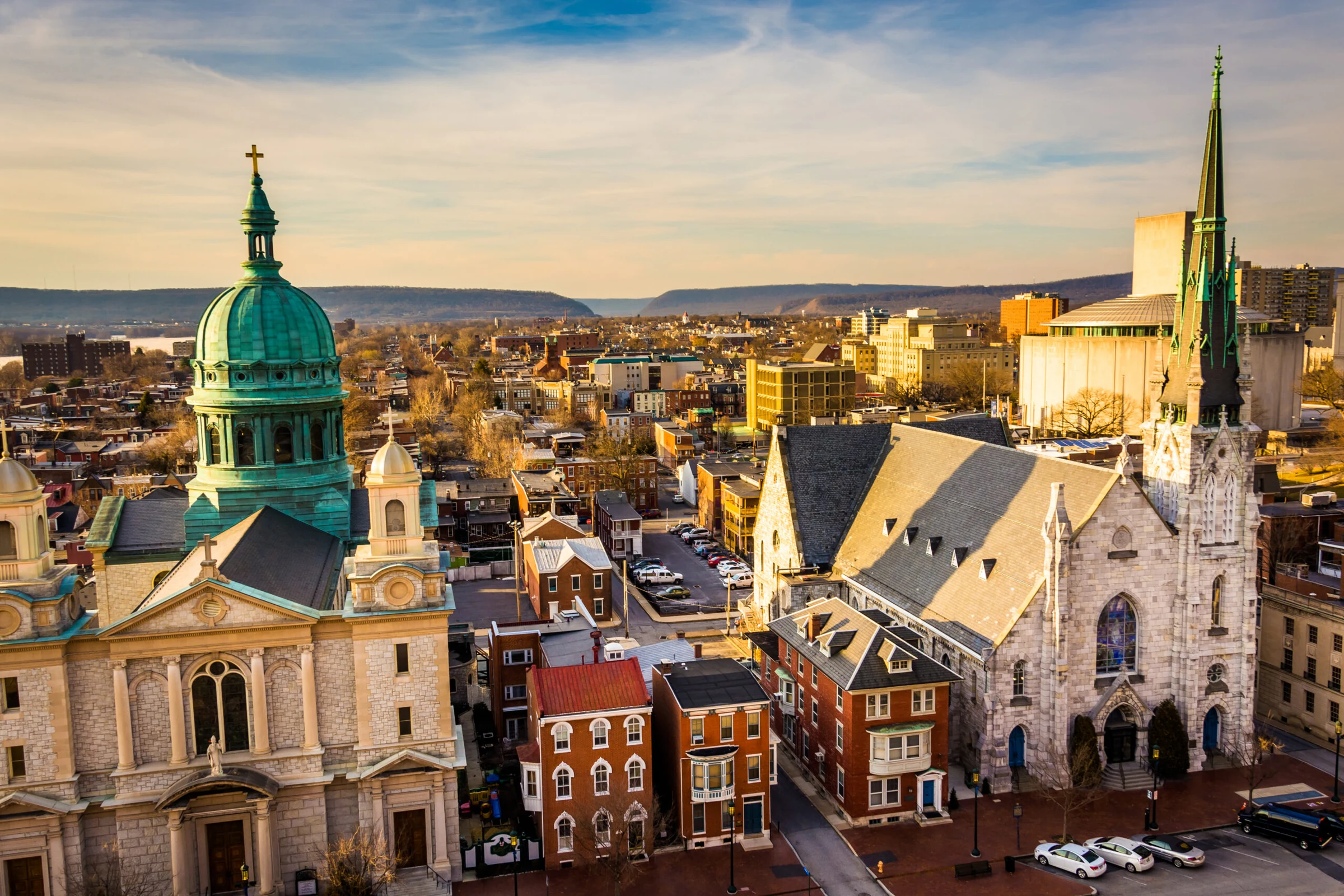
Commercial Roofers in Steelton
Commercial roofing in Steelton should begin with a documented assessment of membrane condition, seams, flashings, drainage, penetrations, and moisture before repair, coating, or replacement is selected. Steelton sits on the Susquehanna River south of Harrisburg, built up around the Cleveland-Cliffs steel operation that has run along the riverbank for more than a century, with Front Street and Second Street carrying the borough's small commercial storefronts uphill from the plant. We service both scales here: the low-slope roofs on mill-adjacent shop buildings, warehouses, and offices tied to steel production, and the smaller storefront and mixed-use roofs along the borough's commercial spine.
Roofing Over Active Steel Production and Adjacent Buildings
Buildings near an operating steel mill face membrane stress that most commercial roofs don't see: airborne particulate from processing, elevated ambient heat near furnace and rolling operations, and periodic exposure to spark carryover on structures close to the mill floor. For office, maintenance shop, and warehouse buildings on or adjacent to the site, we evaluate membrane chemistry before recommending a system. PVC formulations resist the fats, oils, and chemical exposure that accumulate near heavy industrial processing better than a standard TPO sheet, and where hot-work or spark exposure is documented we specify an assembly rated for it rather than defaulting to a generic commercial spec.
Coordination matters as much as material selection on an active industrial site. Roof access, staging, and crane windows typically have to work around production schedules and plant safety protocols, so we build that sequencing into the proposal rather than treating it as a field problem to solve on day one.
Riverfront Humidity and Deck Condition on Older Steel-Frame Buildings
Steelton's building stock along the river includes a number of structures with steel deck dating to mid-20th-century construction, and steel deck exposed to river humidity over decades corrodes at the flutes in ways that are not visible from the roof surface. Before we quote a recover, we open test cuts to check deck condition, because a new membrane and insulation package installed over a compromised deck fails regardless of how well the top layer is installed.
Where full deck replacement isn't in the budget, spray polyurethane foam applied in select structural bays can bridge minor deck irregularity and add insulating value without a structural rebuild, though this only makes sense once a licensed evaluation confirms the deck can still carry the assembly and the foam system's warranty terms are understood up front.
Recover-or-Replace Decisions for Front Street and Second Street Storefronts
The borough's commercial storefronts along Front Street and Second Street tend to have small low-slope roofs, often built-up asphalt systems installed decades ago and recovered at least once already. Layer count matters under building code: most jurisdictions cap the number of roof layers permitted before a full tear-off is required, and the two-layer limit carried in the IBC is the baseline we check against current Dauphin County permitting before quoting a recover.
Insulation R-value is the other trigger. Current IECC energy code requirements for reroofing often exceed what sits under an older built-up system, so a recover that skips added insulation can leave a building out of code compliance even if the membrane itself is structurally sound. We spec tapered ISO board to meet current code minimums and correct low spots at drains in the same pass.
- Low-slope membrane roofs on mill-adjacent shop and warehouse buildings
- Built-up and modified bitumen roofs on Front Street and Second Street storefronts
- Steep-slope sections on older mixed-use buildings above ground-floor retail
- Metal roof sections on maintenance and equipment structures
- Small office and administrative building roofs tied to industrial operations
Manufacturer Specification and Warranty Terms for Industrial Assemblies
We install under manufacturer programs from Carlisle Syntec, Versico, and Holcim Elevate depending on the system and site conditions, and for industrial buildings we typically spec 80-mil TPO or PVC membrane rather than the 60-mil standard, given the higher rooftop foot traffic that comes with periodic equipment servicing near an active plant. Membrane thickness, seam-welding method, and fastening pattern are documented against the manufacturer's published specification sheet as part of the submittal package rather than left to field judgment.
No-dollar-limit warranty terms typically require a manufacturer-certified applicator and a post-installation inspection, both of which we build into the project schedule rather than treat as a closeout formality. For buildings on or near active industrial operations, we also flag any warranty exclusions tied to chemical exposure so the owner knows what is and isn't covered before work starts.
Storm Response and Documentation Near the Riverbank
Wind and hail are the primary storm risks for Steelton's roofs. The river itself doesn't typically threaten roofing systems directly, but wind funneling along the valley can produce localized damage patterns worse than inland readings suggest. When a roof takes storm or debris damage, we provide emergency tarp and dry-in service to stop water intrusion, then document the damage with photos and measurements suitable for an insurance claim file.
We support the documentation side of a claim, including scope notes, photos, and repair estimates, without making representations about how an insurer will rule on a claim. That determination sits with the adjuster and the policy language, not with the roofing contractor.
Common Questions on Steelton Industrial and Commercial Roofing
Can a roof stay in service near an active steel mill without special materials?
Standard commercial membranes work in many locations around a mill site, but buildings closer to hot-work areas or exhaust paths often need chemical- or heat-resistant formulations. We evaluate exposure level by building location before specifying material.
How do you handle roof access on an active industrial property?
We coordinate staging and crane windows with the facility's safety and production schedule in advance, building it into the project timeline rather than adjusting on site as issues come up.
What triggers a full tear-off instead of a recover on an older storefront roof?
Layer count over the code maximum, deck damage found in test cuts, or insulation levels below current IECC minimums are the three most common triggers we find on Steelton's older storefront buildings.
Do you provide documentation for insurance claims after a storm?
Yes. We document damage with photos, measurements, and a written scope a property owner can submit with a claim, though we don't represent the insurer or guarantee a claim outcome.
Which manufacturers do you install under warranty?
Carlisle Syntec, Versico, Holcim Elevate, GAF Commercial, Johns Manville, and Sika Sarnafil, selected by system type and site requirements rather than a single default brand.