
Service Areas
Commercial Roofing
Harrisburg, PA
Harrisburg, PA
Commercial Roofing Contractors Elizabethtown, PA
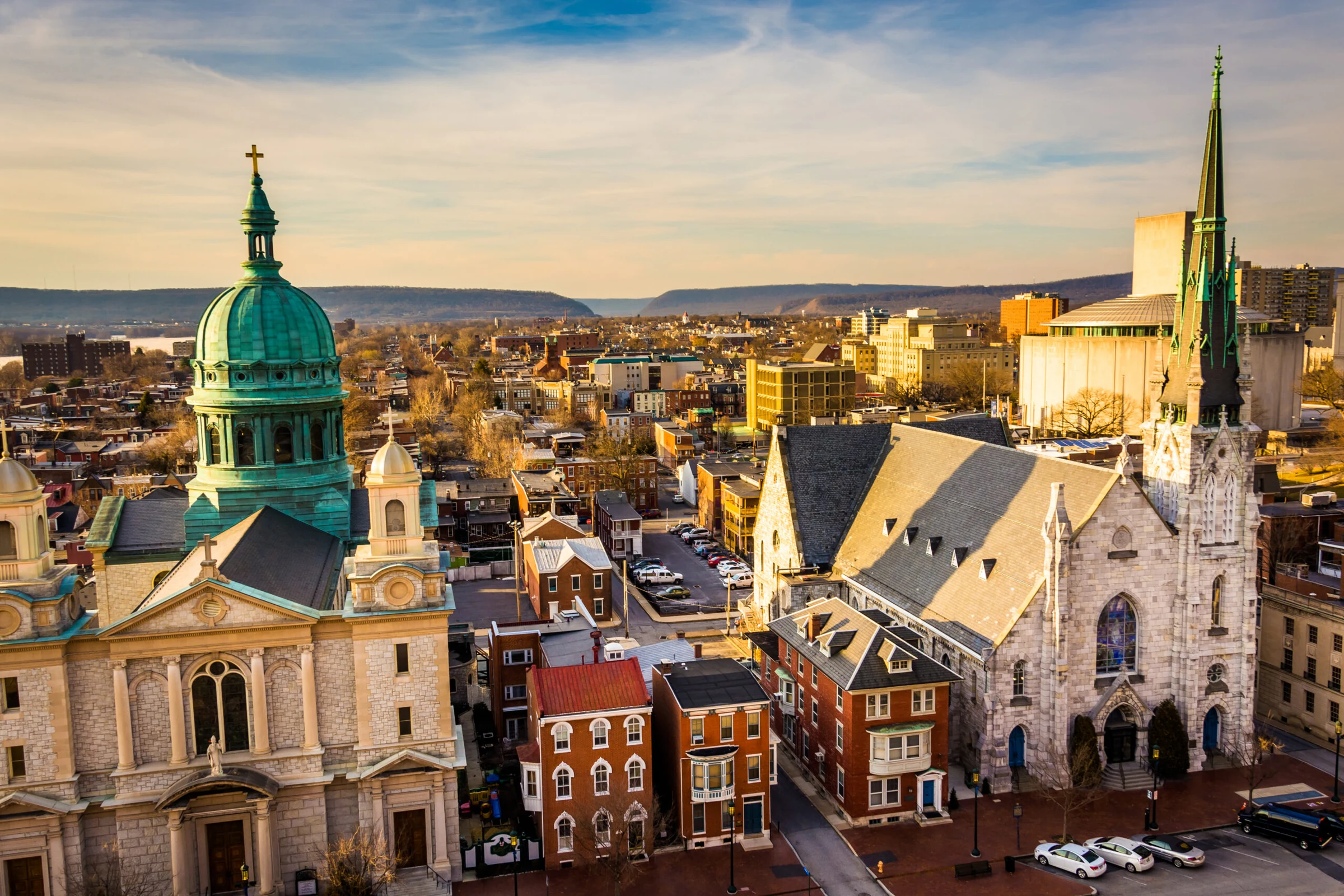
Commercial Roofers in Elizabethtown
Commercial roofers serving Elizabethtown should document leak sources, wet insulation, drainage, edge details, penetrations, and repair history before recommending a scope. Elizabethtown carries three distinct roofing profiles inside one small borough: the Mars Wrigley confectionery plant and its supporting buildings, the Elizabethtown College campus, and a stretch of rail-served light industrial buildings that grew up along the borough's freight lines. Each requires a different specification approach even though the underlying low-slope systems overlap.
Food Manufacturing Plant Roofing Considerations
Confectionery and food processing operations exhaust grease- and sugar-laden air that fouls a roof membrane faster than a typical industrial building, since that residue is sticky rather than dry and tends to bond to the membrane surface around exhaust stacks. We route cleaning cycles and inspection intervals around documented exhaust locations rather than treating the whole roof as a single maintenance zone, and where residue exposure is heaviest we specify PVC membrane over standard TPO given its stronger resistance to fats and oils over the long term.
Food manufacturing facilities also tend to carry internal EHS and food-safety documentation requirements that go beyond a typical commercial submittal package. We provide the membrane thickness, cleaning-resistance data, and manufacturer specification sheets a plant's compliance group needs to file, without making claims about certifications or standards we haven't verified for that specific facility.
Campus Roofing at Elizabethtown College
College campus buildings bring their own mix: dormitory roofs that combine steep-slope dormers with low-slope sections, large clear-span athletic facility roofs, and administrative buildings with more modest rooftop equipment loads. Scheduling is the variable that matters most here. Campus roofing work generally has to happen in the windows between academic terms, particularly for dormitory and dining hall buildings where occupied disruption isn't an option during the school year, so we plan material procurement and crew scheduling around the academic calendar rather than a standard construction timeline.
Rail-Served Light Industrial Buildings
Elizabethtown's rail-served industrial buildings tend to run large clear-span low-slope roofs supporting warehousing and light manufacturing tenants. Roof penetrations here are often tied to process ventilation rather than office HVAC alone, and we detail those penetrations to manufacturer specification since a poorly flashed process vent is one of the more common leak sources we find on older industrial roofs in this corridor.
Rail spur clearance also factors into how we plan equipment staging on these sites, since a building served by an active rail spur often has less usable yard space for crane positioning than a standard highway-served warehouse. We coordinate delivery and staging schedules with the tenant's rail traffic in advance rather than assuming a clear laydown area will be available on the day work begins.
- Food and confectionery manufacturing plant roofing
- Campus academic, athletic, and residential building roofing
- Rail-served warehouse and light industrial roofing
- Downtown storefront and mixed-use building roofing
- Office and administrative building roofing tied to plant operations
Recover-or-Replace Decisions for Downtown Elizabethtown Storefronts
The borough's downtown storefronts along Market Street carry the same recover-versus-replace calculation most older commercial buildings face: layer count under code, deck condition, and current insulation levels against IECC minimums. For downtown building owners, the added insulation from a code-compliant recover also lowers heating and cooling costs, which we factor into the return-on-investment conversation alongside the code compliance requirement itself, since the two considerations point the same direction on most of these buildings.
Test cuts on these storefront roofs frequently turn up two or even three prior roofing layers, since a downtown building with several past owners often has a patchwork repair history rather than one documented reroofing project. We record what each test cut reveals and provide the owner a straightforward accounting of what a tear-off will uncover before the contract is signed, rather than leaving deck condition as a surprise once demolition starts.
Manufacturer Specification and Warranty for Sensitive-Use Facilities
We install under Johns Manville, Sika Sarnafil, and Carlisle Syntec programs depending on the building type, with submittal documentation detailed enough to support a food manufacturing facility's internal compliance review. Warranty terms for plant-adjacent buildings note any exclusions tied to grease or chemical exposure in writing, and for campus buildings we coordinate warranty inspection timing with the institution's facilities office rather than a standard commercial schedule.
For rail-served industrial buildings, we register warranty documentation against the specific tenant lease term where the roof is part of a multi-tenant building, so a warranty claim doesn't get delayed by confusion over which party holds coverage responsibility. This detail matters more in Elizabethtown's rail-served corridor than in a single-owner warehouse park, where lease terms and roof sections are usually easier to match up.
Elizabethtown Roofing Questions From Plant and Facility Managers
Does confectionery plant exhaust require a different roof membrane?
Where grease and sugar residue exposure is heaviest, we typically recommend PVC membrane over standard TPO given its stronger long-term resistance to fats and oils.
Can roofing work happen on campus during the school year?
For buildings with continuous occupancy like dormitories and dining halls, we generally plan work around academic term breaks. Administrative and athletic buildings sometimes allow more flexibility.
What documentation do you provide for a plant's compliance review?
Membrane thickness, manufacturer specification sheets, and cleaning-resistance data, provided as factual product documentation rather than facility-specific certification claims.
How do you detail process exhaust penetrations on industrial roofs?
To the manufacturer's specified boot or curb detail rather than field-mixed sealant, since penetration flashing is the most common source of leaks we see on older industrial roofs here.
Does a recover on a downtown storefront reduce energy costs?
Adding code-required insulation during a recover typically lowers heating and cooling costs, though the exact savings depend on the building's existing insulation and HVAC condition.